Key Takeaways
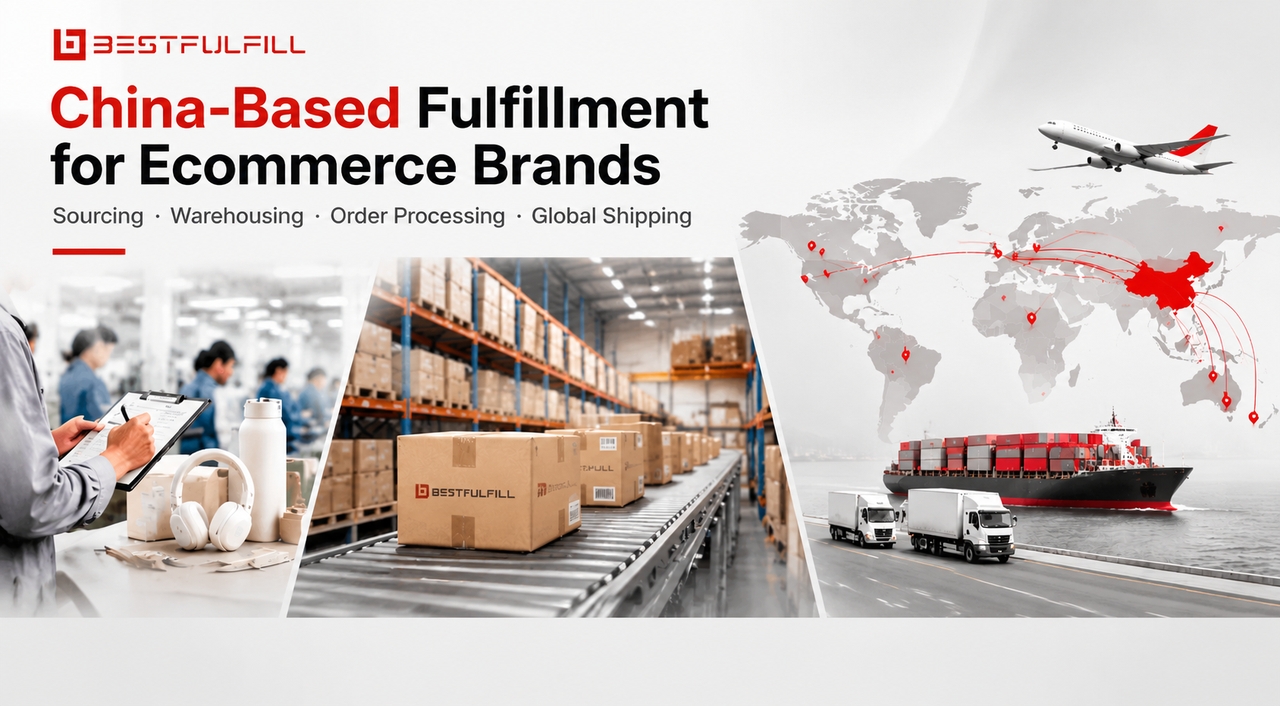
- China-based fulfillment connects inventory receiving, warehousing, order processing, and international shipping.
- Effective warehousing relies on organized storage locations, accurate inventory records, and regular stock checks.
- Reliable order processing depends on picking accuracy, order verification, and efficient dispatch.
- Global shipping solutions should balance delivery costs, tracking visibility, destination coverage, and customer expectations.
- Bestfulfill combines China-based fulfillment with sourcing, QC, branded packaging, and international shipping.
Quick Answer: What Are the Best China-Based Fulfillment Services for Ecommerce Brands?
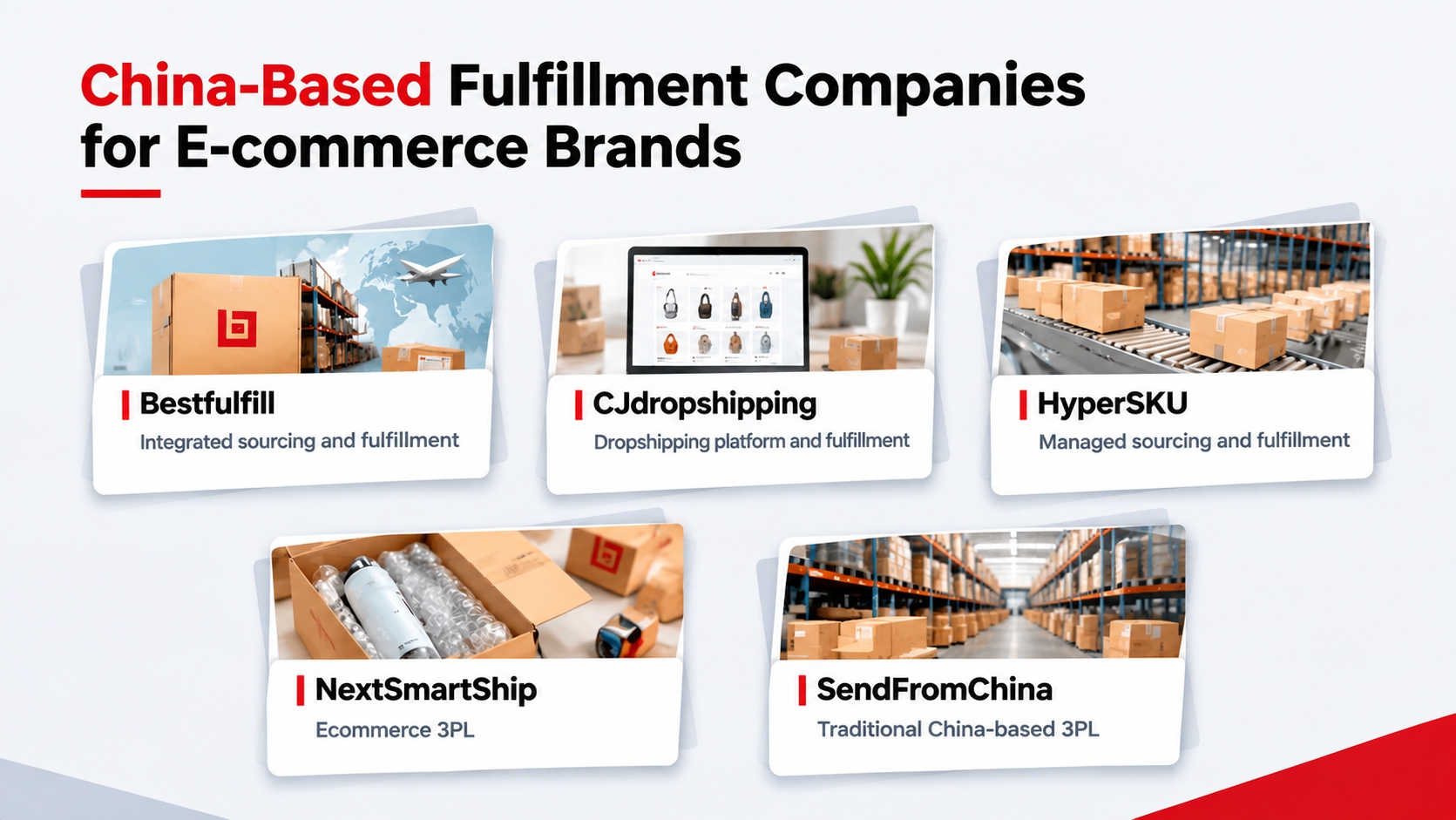
Bestfulfill, CJdropshipping, HyperSKU, NextSmartShip, and SendFromChina are five China-based fulfillment providers worth comparing. Each supports different ecommerce requirements, from product testing to managed sourcing and warehouse fulfillment.
| Provider | Best For | Core Focus |
| Bestfulfill | Growing ecommerce brands sourcing from China | Sourcing, QC, warehousing, global fulfillment |
| CJdropshipping | Dropshipping startups and product testing | Product sourcing, dropshipping, order fulfillment |
| HyperSKU | Brands needing managed sourcing and fulfillment | Supplier coordination, customization, shipping |
| NextSmartShip | DTC brands with established inventory | Warehousing, kitting, order fulfillment |
| SendFromChina | Merchants holding inventory in China | Storage, picking, packing, international shipping |
The best choice depends on whether a business needs flexible dropshipping, warehouse-focused fulfillment, or broader supply chain support.
For a more detailed comparison, read Best China 3PLs for Cross-Border Ecommerce in 2026: An Honest Comparison.
How to Choose the Right China-Based Fulfillment Service
Choosing a fulfillment partner involves more than comparing shipping rates. Focus on five practical factors.
Match the Provider to Your Business Model
Dropshipping startups may prioritize sourcing flexibility, while established ecommerce brands often require more structured inventory management, branded packaging, and international fulfillment.
Choose based on your operating requirements rather than the number of services advertised.
Evaluate Sourcing and Supply Chain Support
If you work with multiple Chinese suppliers or sell customized products, check whether the provider supports sourcing, supplier coordination, quality inspections, and inventory consolidation.
These services can help reduce operational handoffs between production and fulfillment.
Check System Integration and Operational Compatibility
Confirm whether the provider supports your ecommerce platform, such as Shopify, and how orders are transferred into its fulfillment system.
Also verify inventory visibility, tracking updates, fulfillment statuses, and the actual scope of automation.
Compare Total Fulfillment Costs
Look beyond shipping rates. Compare receiving, storage, picking, packing, packaging, international delivery, and additional service fees using the same products and order assumptions.
A lower shipping quote does not necessarily mean a lower total cost per fulfilled order.
Consider Scalability and Customer Support
Choose a provider that can support growing order volumes, additional SKUs, and changing fulfillment requirements.
Responsive communication, defined support channels, and clear exception-handling procedures are equally important.
Which Provider Fits Your Ecommerce Business?
| Business Scenario | Provider to Consider |
| Testing new products through dropshipping | CJdropshipping |
| Managing multiple suppliers, QC, and global fulfillment | Bestfulfill |
| Seeking managed sourcing and customization | HyperSKU |
| Requiring kitting and structured warehouse fulfillment | NextSmartShip |
| Holding finished inventory in China | SendFromChina |
These recommendations reflect service-model suitability rather than independently verified performance rankings.
How Do Fulfillment Companies Differ in Warehousing, Order Processing & Global Shipping?
Warehousing, order processing, and global shipping form the foundation of ecommerce fulfillment.
Understanding how each stage works helps brands evaluate inventory accuracy, fulfillment efficiency, and international delivery requirements.
Warehousing: From Receiving to Inventory Control
A well-organized fulfillment warehouse relies on standardized receiving, storage, and inventory management procedures.
Key operations include:
- Inbound Receiving: Verify incoming products, quantities, and relevant receiving information.
- Location Coding: Assign inventory to coded storage locations to make products easier to locate.
- Inventory Management: Maintain stock records through a warehouse management system (WMS).
- Stock Auditing: Conduct periodic physical checks to identify and correct inventory discrepancies.
Warehouses may use small storage locations, high racks, or floor-stacking areas depending on product dimensions and inventory volume.
Why it matters: Accurate inventory records help reduce stock discrepancies, picking errors, and fulfillment delays.
Order Processing: From Customer Order to Shipment
Order processing turns customer purchases into ready-to-ship parcels.
A typical workflow includes:
- Order Synchronization: Transfer orders from supported ecommerce platforms into the fulfillment system through available integrations.
- PDA-Guided Picking: Use handheld devices to receive picking tasks and locate products through assigned warehouse location codes.
- Order Verification: Scan and verify products against order information before packing.
- Packing and Labeling: Prepare parcels according to order requirements and applicable packaging instructions.
- Logistics Sorting and Dispatch: Sort prepared parcels by relevant logistics criteria and transfer them to selected shipping channels.
Why it matters: Structured workflows connect digital order records with physical warehouse operations, helping reduce errors and unnecessary manual handling.
Global Shipping: From China to International Customers
International shipping options vary by destination, product characteristics, parcel weight, delivery expectations, and cost.
| Shipping Approach | Typical Application | Main Consideration |
| Express Shipping | Time-sensitive shipments | Higher shipping costs |
| Cross-Border Dedicated Lines | Ecommerce parcels on supported routes | Route and product eligibility |
| Postal / Economy Services | Cost-sensitive, eligible parcels | Delivery speed and tracking differences |
| Overseas Warehouse Fulfillment | Established demand in specific markets | Inventory investment and local storage costs |
| Holding finished inventory in China | SendFromChina | Storage, picking, packing, international shipping |
After packing, parcels enter the logistics sorting process. Automated sorting systems can route shipments according to destination, product characteristics, logistics provider, and available shipping channels.
Tracking information then supports shipment monitoring after dispatch.
Why it matters: Not every order should use the same delivery route. Brands should evaluate shipping solutions using their actual products, target markets, and service requirements.
How Bestfulfill Supports the Fulfillment Process
Bestfulfill connects product sourcing with China-based warehousing, order fulfillment, and international shipping.
| Capability | How Bestfulfill Supports Ecommerce Brands |
| China Warehousing | Location-coded storage and organized inventory management |
| Inventory Management | System-linked inventory records supported by periodic stock checks |
| Order Processing | PDA-guided picking, order verification, packing, and dispatch |
| Quality Control | Product-category-specific inspections and processing support |
| Branded Fulfillment | Custom packaging, labeling, inserts, and approved processing requirements |
| Global Shipping | Automated sorting based on destination and shipping requirements |
| 30+ Overseas Warehouses | Regional inventory and hybrid fulfillment options |
| Free Product Sourcing & Quotations | Sourcing assistance without a separate sourcing quotation fee |
This approach is particularly relevant for brands sourcing from multiple Chinese suppliers and managing international customer orders.
For more on inventory placement strategies, read Best Shopify Fulfillment Options in 2026: Dropshipping, 3PL or Hybrid?.
Red Flags When Evaluating a China-Based Fulfillment Provider
Before choosing a fulfillment partner, watch for four common warning signs.
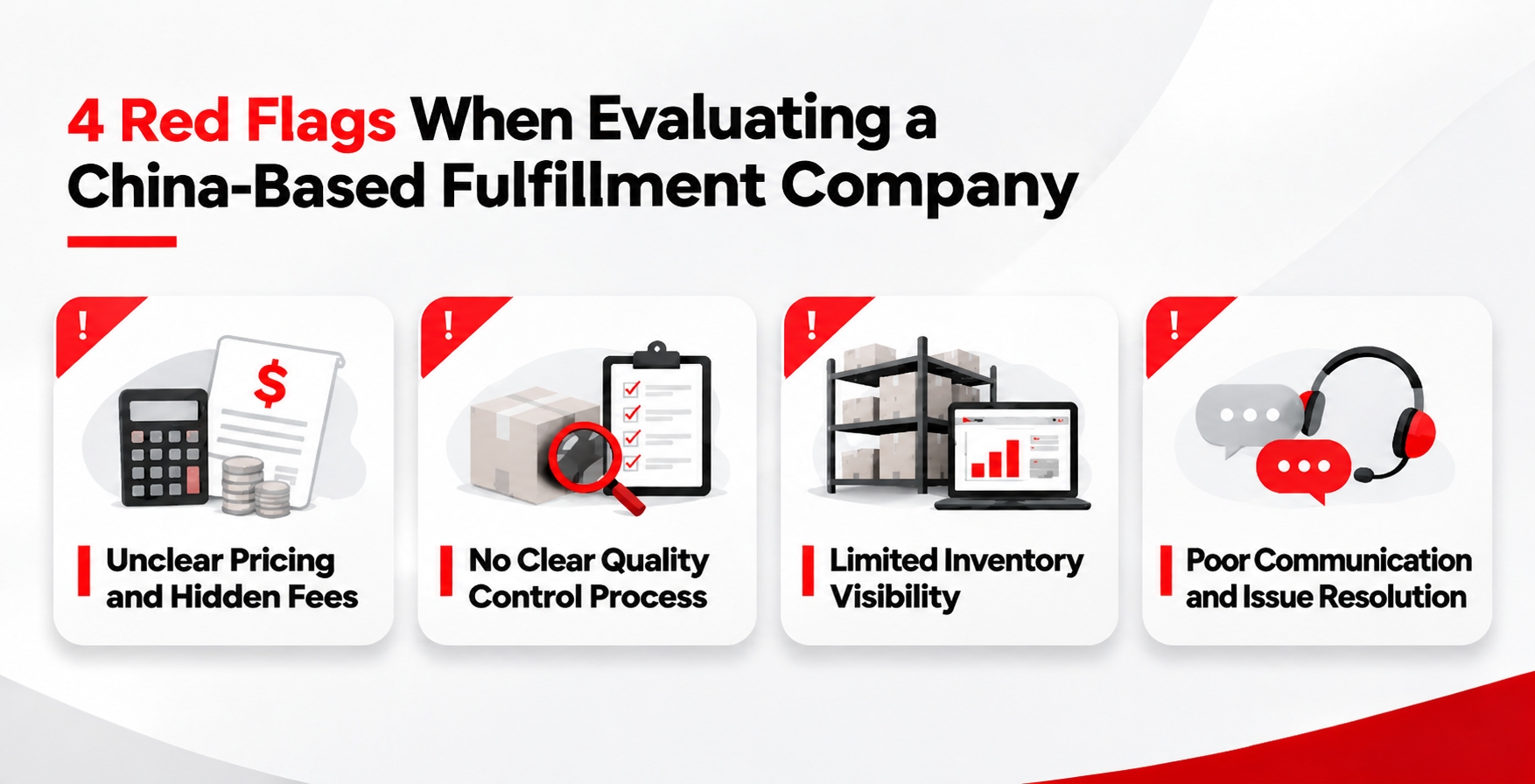
- Unclear Pricing and Hidden Fees
Low advertised shipping rates may exclude receiving, storage, packaging, or handling fees. Request a complete quotation before committing.
- No Clear Quality Control Process
A provider should explain which inspections are available, how defects are reported, and how quality-related issues are handled.
- Limited Inventory Visibility
Inaccurate inventory records can lead to stock discrepancies and delayed orders. Check available inventory reports and stock reconciliation procedures.
- Poor Communication and Issue Resolution
Unclear responsibilities can make fulfillment exceptions difficult to manage. Look for defined support channels and transparent escalation procedures.
Final Takeaway
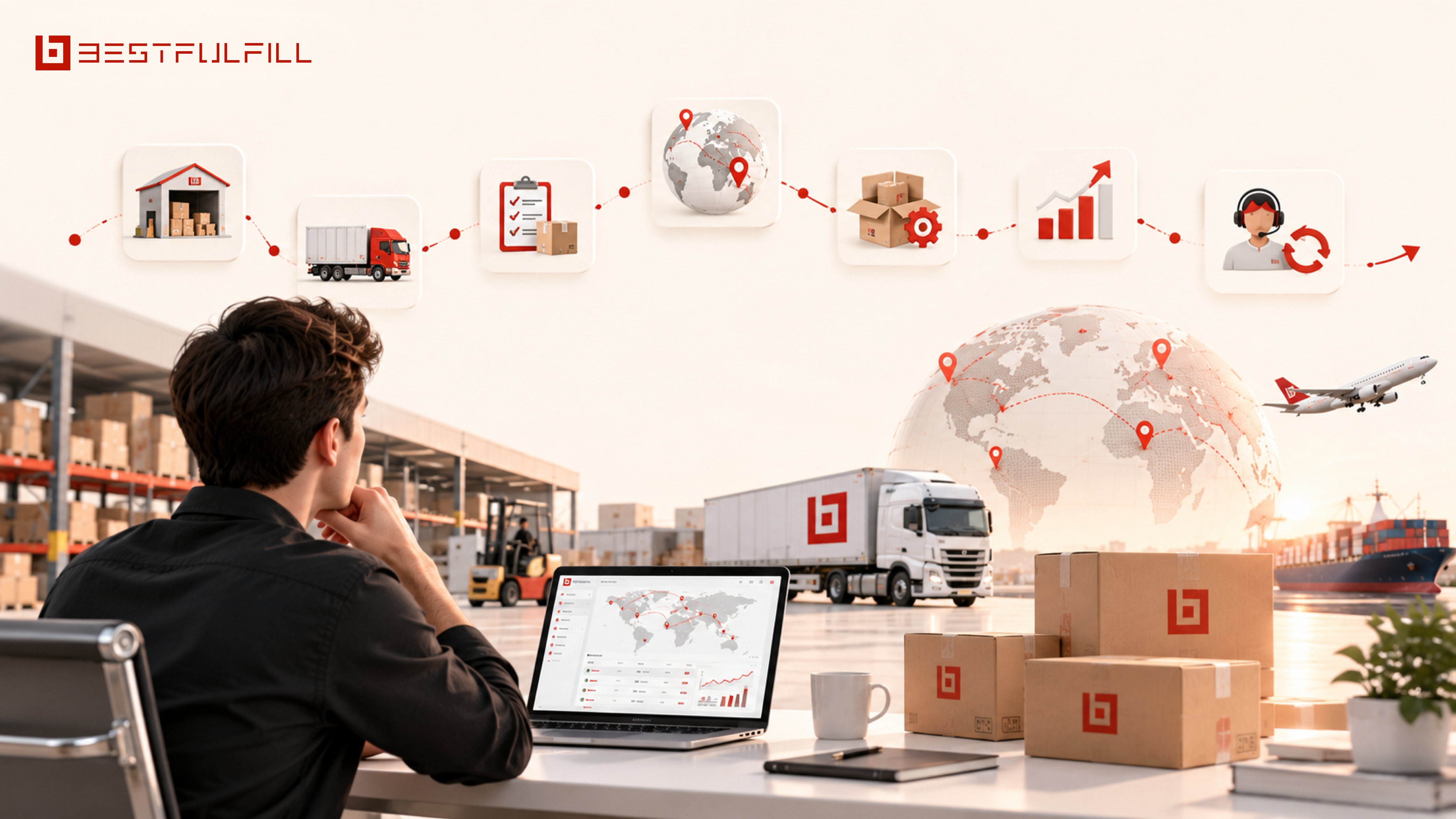
The right China-based fulfillment provider should match your sourcing model, inventory requirements, order-processing workflow, and international shipping needs.
As ecommerce brands grow, coordinating suppliers, quality control, warehouse operations, and cross-border delivery can become increasingly complex.
Bestfulfill connects product sourcing with global fulfillment, offering an integrated option for brands that need support across multiple stages of their supply chain.
Frequently Asked Questions (FAQ)
How long does order processing take in a China fulfillment warehouse?
Processing times depend on order volume, inventory availability, warehouse procedures, and service agreements. Before cooperation, confirm the provider's processing standards, order cutoff arrangements, and peak-season requirements.
How long does shipping from China take?
Delivery times vary by destination, shipping method, parcel weight, product characteristics, and customs procedures. Express services, postal shipping, and dedicated cross-border lines offer different cost and delivery profiles. Request estimates for the actual shipping route.
Can China-based fulfillment companies integrate with Shopify?
Yes. Many providers support Shopify through applications, APIs, or other integration methods. Confirm whether the provider supports order imports, inventory updates, fulfillment statuses, and tracking information for your specific store setup.
Can a China fulfillment provider handle products from multiple suppliers?
Yes. Some providers support inventory consolidation, allowing products from different Chinese suppliers to be received, inspected, and stored at one fulfillment center. Exact receiving and inspection arrangements depend on the provider and agreed services.
Can a China-based fulfillment company provide custom packaging?
Yes. Selected providers offer branded packaging, inserts, labels, and other approved customization services. Confirm available materials, minimum quantities, preparation requirements, and applicable fees.
Can I combine China-based fulfillment with overseas warehousing?
Yes. Some providers support both China-based and overseas inventory arrangements. Brands can initially ship orders directly from China and later position selected products in overseas warehouses when regional demand becomes more predictable.
Does Bestfulfill offer free product sourcing?
Yes. Bestfulfill offers free product sourcing and quotations to all customers. Merchants can submit product requirements and receive sourcing assistance before proceeding with purchasing. Product purchases and applicable services, including QC, warehousing, packaging, fulfillment, and shipping, may involve separate charges.