Key Takeaways
- Amazon FBA is strongest when Amazon is the primary sales channel and Prime access and operational simplicity matter most.
- 3PL fulfillment generally gives Shopify-first brands more control over branded packaging, inventory, customer experience, and multi-channel operations.
- Amazon Multi-Channel Fulfillment (MCF) can fulfill Shopify orders, but inventory and fulfillment still operate within Amazon’s infrastructure.
- Full-service 3PLs can extend responsibility beyond warehousing into sourcing, QC, product preparation, and cross-border operations.
- Hybrid fulfillment can work well when Amazon and Shopify both contribute meaningful sales.
- The right model should follow your channel strategy, inventory structure, and operational responsibility needs.
Quick Answer: 3PL or Amazon FBA for Shopify?
Use Amazon FBA when: Amazon is your primary sales channel.
Use a 3PL when: Shopify or DTC is the core business and you need more control over branding, inventory, and multi-channel fulfillment.
Use a full-service 3PL when: Your operational needs begin before warehousing, such as sourcing, QC, product preparation, or cross-border coordination.
Use a hybrid model when: Amazon and Shopify are both strategically important.
For Shopify brands, the decision is not only about shipping speed or price.
It is also about:
- Where inventory is managed
- How much control the brand needs
- Which channels the operation must support
- Where the fulfillment partner’s responsibility begins
3PL vs Amazon FBA: Quick Comparison
| Area | Amazon FBA / MCF | Standard 3PL | Full-Service 3PL |
| Best For | Amazon-first brands | Shopify / DTC / multi-channel brands | Brands needing broader supply-chain support |
| Primary Ecosystem | Amazon-centered | Channel-neutral | Channel-neutral |
| Responsibility Usually Starts At | Inventory entering Amazon’s network | Receiving / warehousing | Can begin with sourcing, QC, or product preparation |
| Branded Packaging | More standardized | More flexible | More flexible |
| Multi-Channel Fulfillment | Available through MCF | Common capability | Common capability |
| Inventory Model | Amazon network | Independent 3PL inventory | Can combine origin-country and regional inventory |
| Upstream Sourcing / QC | Not the core model | Usually limited | Available with some providers |
| Best Fit for Shopify-First Brands | Depends on operating model | Strong | Strong when upstream support is also needed |
What Is Amazon FBA and MCF?
Amazon FBA, or Fulfillment by Amazon, allows sellers to send inventory into Amazon fulfillment centers.
Amazon stores the inventory, then picks, packs, and ships orders placed through the Amazon marketplace.
Its biggest advantage is how tightly fulfillment is integrated with Amazon itself, including Prime.
Amazon Multi-Channel Fulfillment (MCF) extends this infrastructure to external sales channels such as Shopify. Amazon Multi-Channel Fulfillment for Shopify
The distinction matters:
- FBA primarily fulfills Amazon marketplace orders.
- MCF allows inventory stored inside Amazon’s network to fulfill external-channel orders.
Shopify also supports Amazon MCF integration for merchants that want Amazon to pick, pack, and ship Shopify orders. Shopify: Multi-Channel Fulfillment by Amazon
For a Shopify brand, MCF can reduce the need to build a completely separate fulfillment operation.
But inventory, fulfillment rules, and the broader operating structure still sit inside Amazon’s ecosystem.
That makes MCF useful for some brands, but different from using a fulfillment partner designed around Shopify or broader multi-channel commerce.
What Is a 3PL for Shopify Brands?
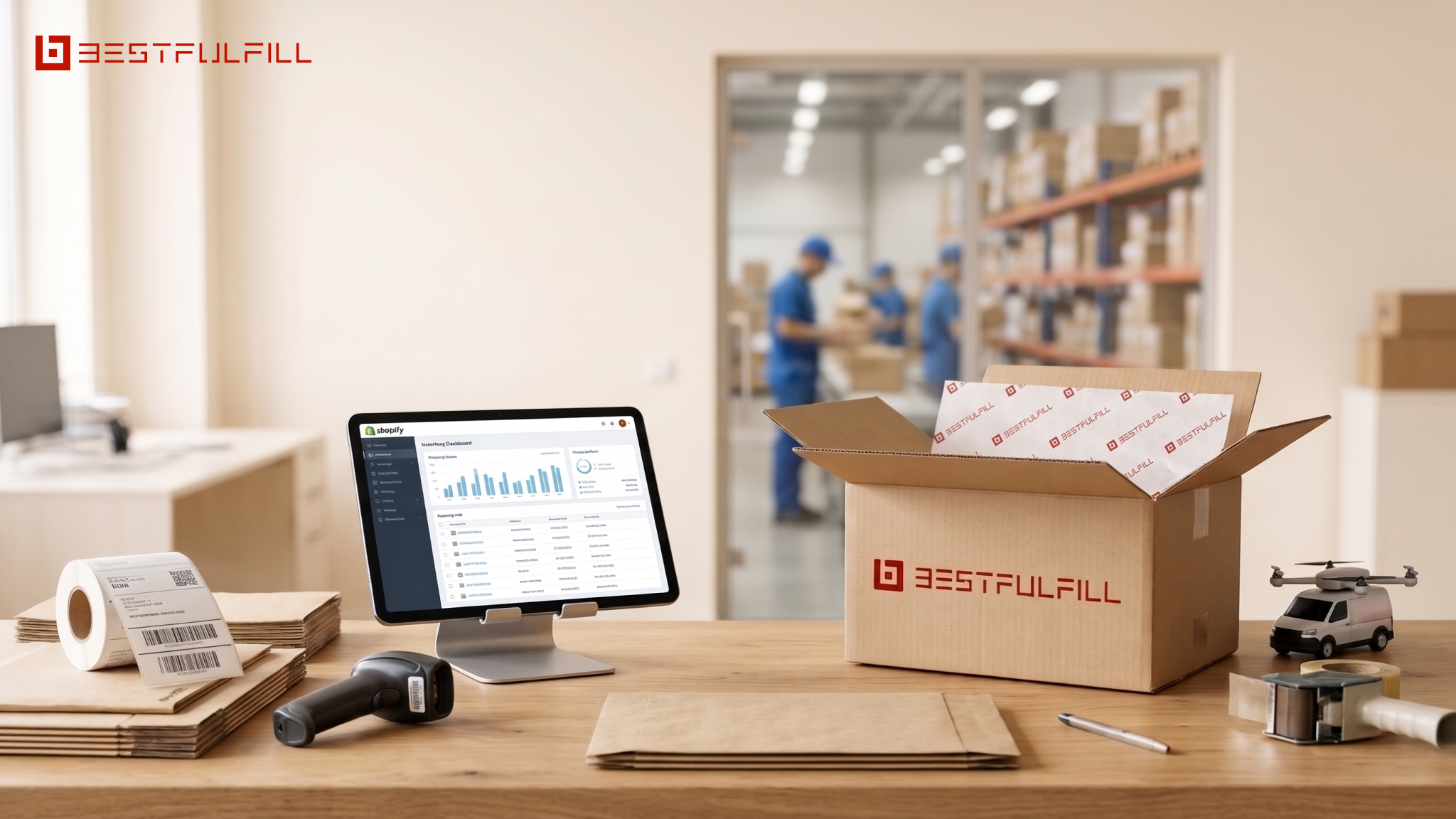
A third-party logistics provider manages some or all fulfillment operations on behalf of an ecommerce brand.
Depending on the provider, that can include:
- Receiving
- Warehousing
- Inventory management
- Pick and pack
- Shipping
- Returns
- Custom packaging
- Kitting
- Subscription orders
- Multi-channel fulfillment
The category is broad.
Some 3PLs focus mainly on warehousing and order fulfillment.
Others support a wider operational scope, including:
- Product preparation
- Branded packaging
- B2B orders
- Sourcing
- Quality control
- Cross-border logistics
For example, Bestfulfill operates as a full-service ecommerce 3PL, connecting China sourcing and QC with warehousing, branded fulfillment, and global shipping.
For a broader comparison of Shopify-focused providers, see Best Shopify 3PL Fulfillment Companies for Growing Ecommerce Brands in 2026. Best Shopify 3PL Fulfillment Companies for Growing Ecommerce Brands in 2026
The important question is therefore not simply:
“Do I need a 3PL?”
It is:
“How much of the operation do I want one partner to own?”
The 5 Differences That Matter Most
Sales Channel Fit
This is the first question brands should answer.
Amazon FBA is designed primarily around Amazon marketplace orders.
MCF extends that network to external channels, but Amazon remains at the center of the infrastructure.
A 3PL is generally more channel-neutral.
Depending on the provider, the same fulfillment operation may support:
- Shopify
- TikTok Shop
- Regional marketplaces
- Wholesale
- B2B orders
- Subscription channels
A simple decision rule is:
Amazon drives most revenue → FBA is usually the stronger starting point.
Shopify or DTC drives growth → a 3PL is generally more flexible.
Amazon and Shopify are both strategically important → consider a hybrid model.
Branding and Customer Experience
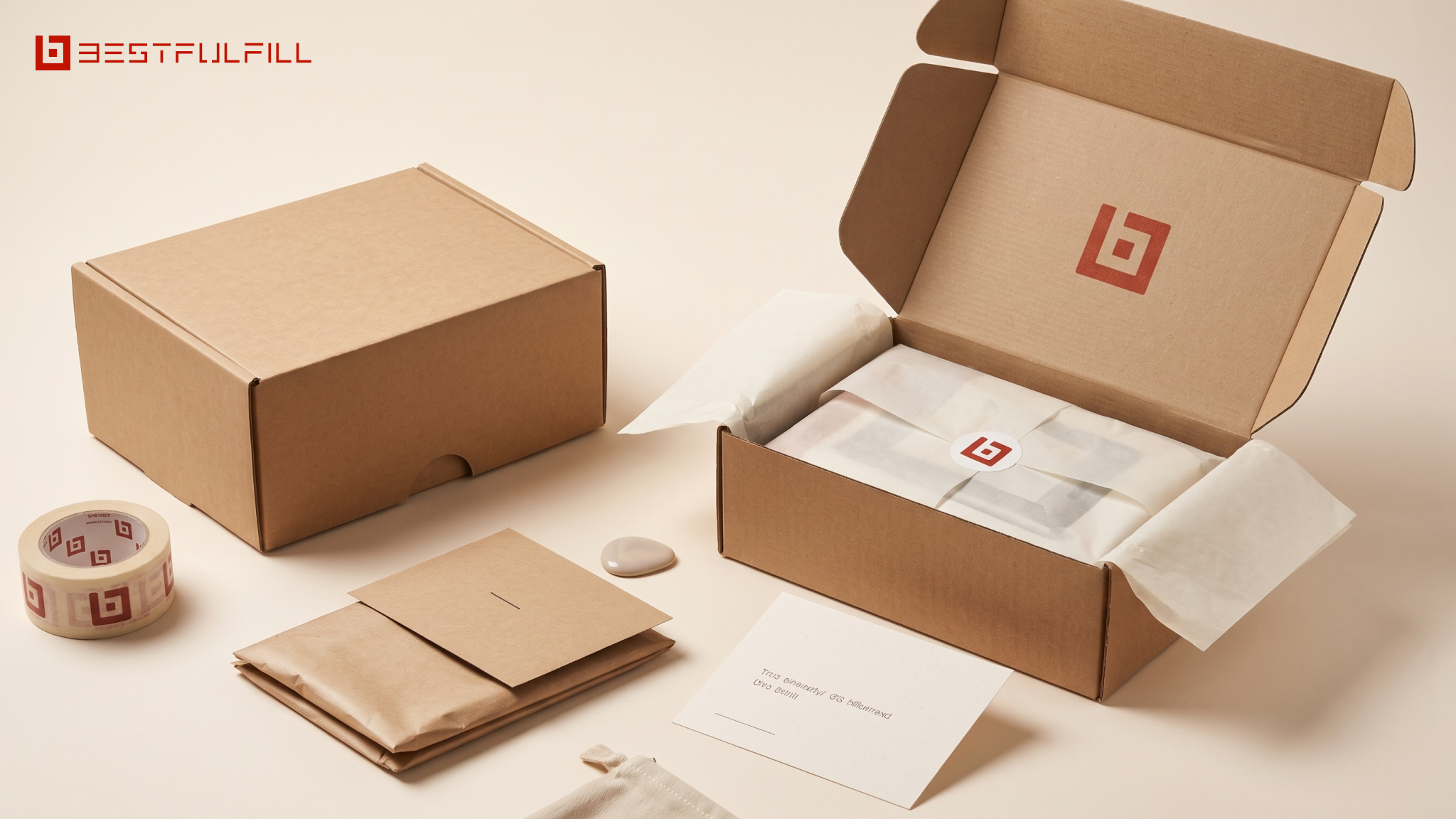
Amazon and Shopify play different roles in the customer relationship.
Amazon gives sellers access to a large marketplace and fulfillment network.
Shopify gives brands greater ownership over the customer journey.
For Shopify brands, the customer experience often continues after checkout.
Fulfillment may include:
- Custom boxes
- Branded mailers
- Inserts
- Tissue
- Gift notes
- Product bundles
- Seasonal packaging
- Subscription packaging
A 3PL can often support these workflows more flexibly.
Providers such as Bestfulfill can support branded packaging, inserts, kitting, and other customized fulfillment workflows for Shopify-led brands.
Amazon uses a more standardized fulfillment model, although eligible products may use programs such as Ships in Product Packaging.
The real question is:
How much control does the brand need over the physical customer experience?
If packaging, gifting, bundles, inserts, or unboxing are part of the brand strategy, a 3PL generally provides more flexibility.
Inventory Architecture
Inventory strategy becomes more important as the number of channels and markets increases.
With FBA and MCF, brands can use inventory stored inside Amazon’s network for Amazon and external-channel orders.
That can be convenient when most inventory is already committed to Amazon.
A 3PL may provide a more independent inventory structure.
Depending on the provider, the same inventory operation may support:
- Shopify
- TikTok Shop
- Regional marketplaces
- Wholesale
- B2B
- Multiple storefronts
Brands may also use different inventory strategies.
Origin-Country Inventory
Products remain closer to manufacturing and ship cross-border after orders are placed.
Regional Inventory
Inventory is positioned closer to customers for local fulfillment.
Hybrid Inventory
Some inventory remains near manufacturing while higher-volume SKUs are positioned in key markets.
Full-service providers such as Bestfulfill can support inventory in China alongside overseas warehousing and regional fulfillment, allowing inventory placement to evolve as demand becomes more predictable.
The key question is:
Do you want Amazon inventory to power the rest of your business, or do you want inventory managed independently across channels and markets?
Total Cost Model
FBA and 3PL pricing should not be compared using one visible fee.
The better comparison is:
Total cost per delivered order under your actual operating model.
Amazon FBA or MCF costs may include:
- Fulfillment fees
- Storage
- Aged inventory charges
- Inbound-related costs
- Removal or disposal
- Other Amazon-specific fees
A 3PL may charge for:
- Receiving
- Storage
- Pick and pack
- Packaging
- Shipping
- Returns
- Kitting
- Special projects
- Monthly minimums
The cheaper option depends on factors such as:
- Product size
- Inventory turnover
- Order volume
- Seasonality
- Packaging requirements
- Returns
- Channel mix
A fast-moving Amazon-heavy SKU may fit FBA economics very well.
A Shopify product with branded packaging and multi-channel demand may create a very different cost structure.
Compare the operating model first. Then compare the cost of running that model.
Operational Scope and Responsibility
This is one of the biggest differences for scaling Shopify brands.
The question is not only:
“Who ships the order?”
It is:
“Where does the partner’s responsibility begin?”
For Amazon FBA, responsibility primarily centers on inventory entering Amazon’s fulfillment infrastructure.
A standard 3PL often begins at receiving and warehousing.
A broader full-service 3PL may start earlier.
For brands sourcing internationally, the operational chain may look like:
Supplier → QC → Product Preparation → Inventory → Fulfillment → Cross-Border Shipping → Customer
Every additional provider creates another operational handoff.
For some brands, those handoffs are manageable.
For others, sourcing, QC, warehousing, fulfillment, and shipping affect each other closely enough that a more integrated model becomes useful.
This is where Bestfulfill differs from a warehouse-first 3PL: responsibility can begin earlier in the workflow, connecting China sourcing and QC with warehousing, fulfillment, and global shipping.
For a deeper comparison of this operating model, see Best China-Based 3PL Companies for Ecommerce Brands in 2026. Best China-Based 3PL Companies for Ecommerce Brands in 2026
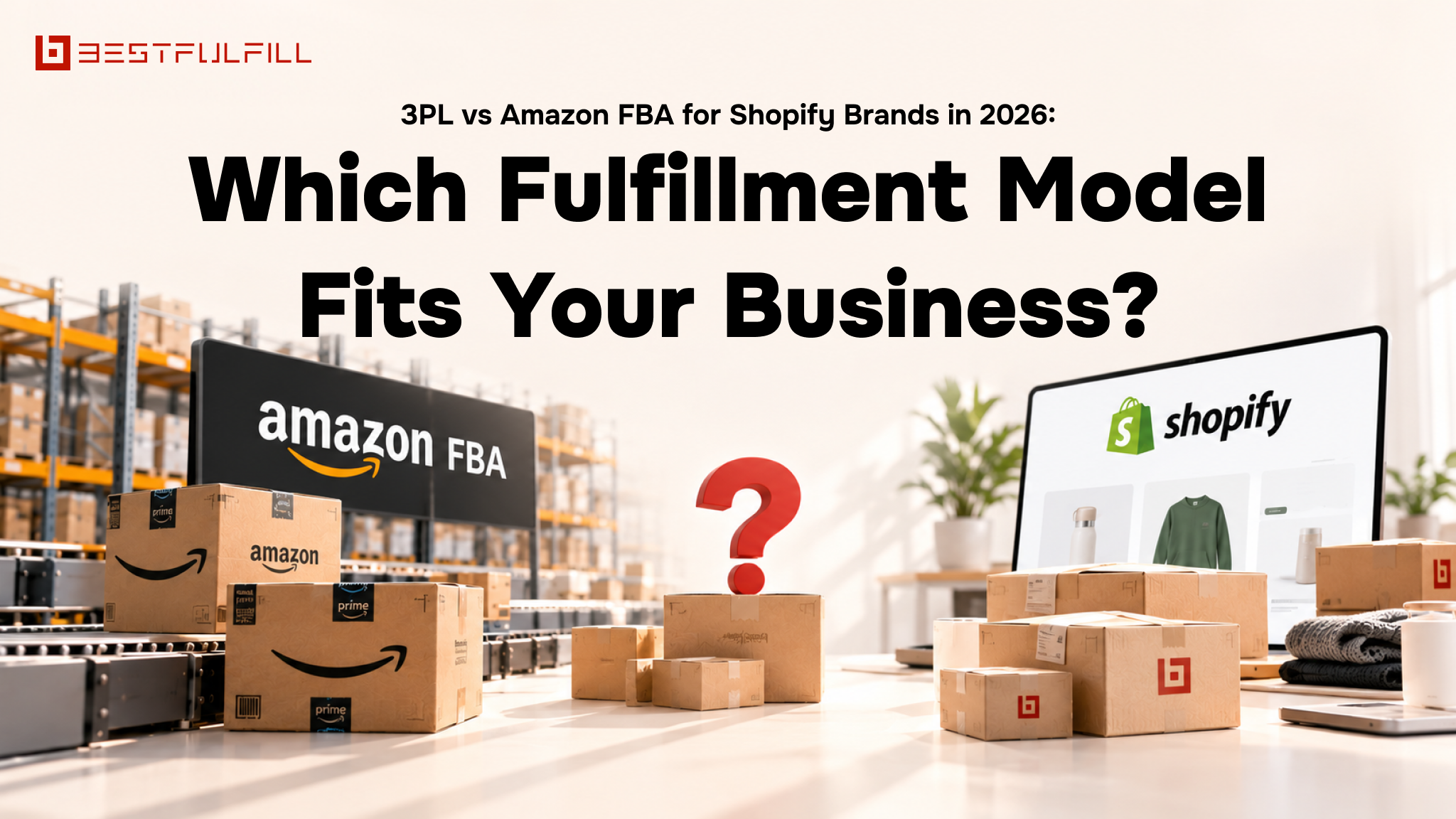
Which Fulfillment Model Fits Your Business?
Use this decision framework:
| Your Situation | Better Fit |
| Amazon is your primary sales channel | Amazon FBA |
| Shopify / DTC is your primary channel | 3PL |
| You need more control over branded packaging | 3PL |
| Most inventory already sits inside Amazon’s network | FBA / MCF |
| You sell across several channels | 3PL or Hybrid |
| Amazon and Shopify are both major channels | Hybrid |
| You need independent multi-market inventory | 3PL |
| You source internationally and need sourcing + QC + fulfillment connected | Full-Service 3PL |
| You need responsibility to start before warehouse receiving | Full-Service 3PL |
Reconsider your current model when your channel mix, packaging needs, markets, inventory structure, or operational complexity changes.
Can Shopify Brands Use Both Amazon FBA and a 3PL?
Yes.
A common hybrid structure is:
Amazon orders → FBA
Shopify / DTC / TikTok Shop / Wholesale → 3PL
The benefit is specialization.
Amazon orders remain optimized around Amazon and Prime, while DTC orders can use more flexible packaging and workflows.
The trade-off is additional inventory complexity.
Brands need clear rules for:
- Inventory allocation
- Replenishment
- Forecasting
- Order routing
- Returns
A hybrid model makes sense when the benefits of channel-specific fulfillment outweigh the added operational complexity.
Where Bestfulfill Fits
Bestfulfill is most relevant for Shopify and multi-market brands that need support before inventory reaches the warehouse.
It connects China sourcing and QC with warehousing, branded fulfillment, and global shipping in one workflow.
Red Flags When Choosing Between FBA and a 3PL
Watch for these mistakes:
- Choosing only based on the lowest visible fee
- Using an Amazon-centered model for a Shopify-first business without testing the trade-offs
- Ignoring packaging and customer experience
- Holding duplicate inventory without a clear allocation plan
- Having no clear owner for fulfillment exceptions
- Moving all inventory before testing the new model
- Choosing a provider without understanding where its responsibility begins and ends
The biggest risk is choosing a fulfillment model that no longer matches how the business actually sells and operates.
Final Takeaway
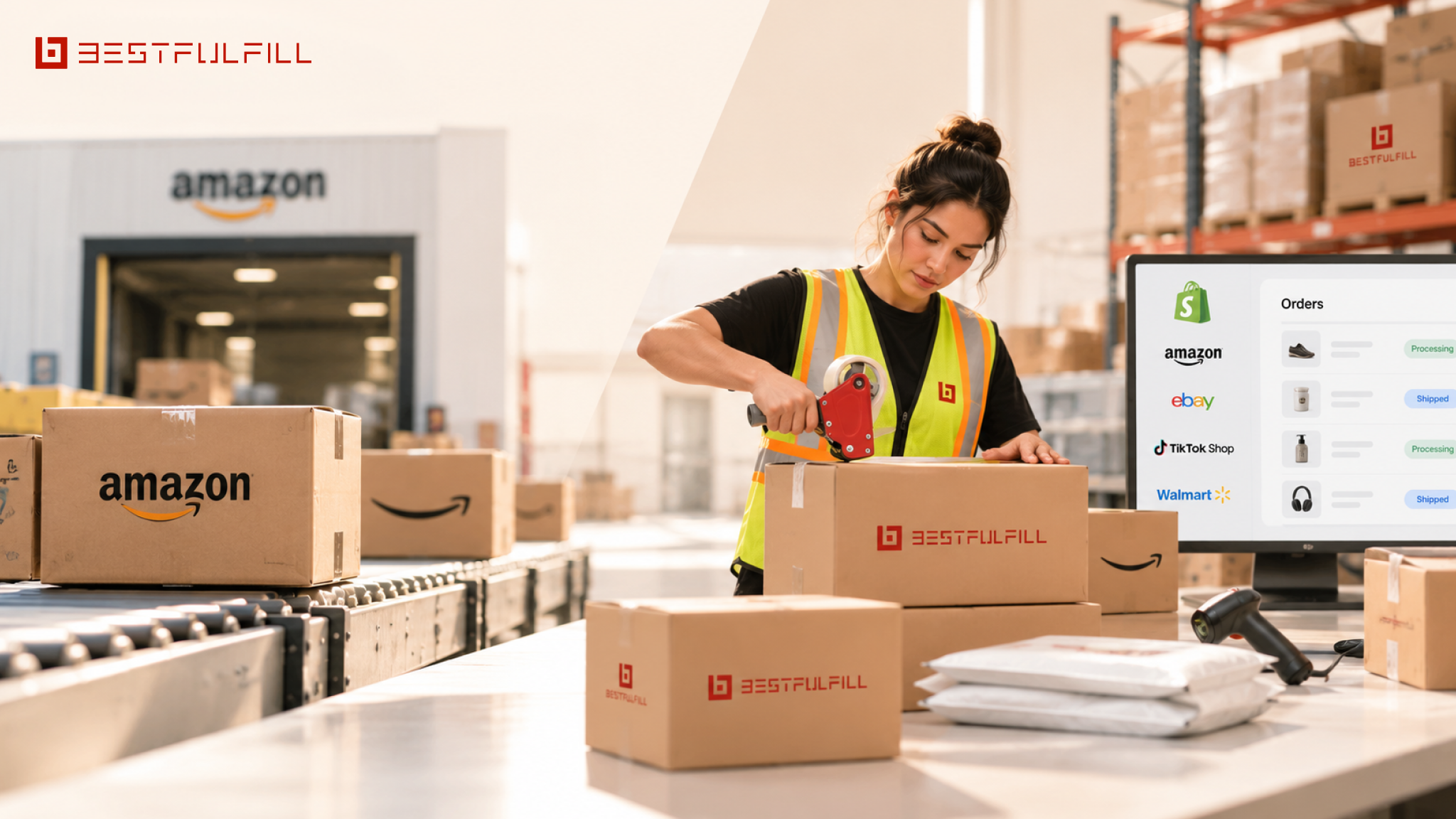
Amazon FBA and 3PL fulfillment are built around different operating models.
FBA is strongest when Amazon is the center of the business.
A 3PL is generally stronger when Shopify, brand control, multi-channel selling, or independent inventory management matter more.
A full-service 3PL becomes more relevant when operational responsibility also needs to cover sourcing, QC, product preparation, or cross-border coordination.
For brands sourcing from China, providers such as Bestfulfill can be particularly relevant when these upstream and downstream operations need to work as one connected workflow.
For a broader comparison across ecommerce fulfillment models, see Best 3PL Fulfillment Companies for Ecommerce in 2026. Best 3PL Fulfillment Companies for Ecommerce in 2026
When both Amazon and Shopify are major channels, a hybrid model can give each channel the structure it needs.
Choose the fulfillment model around how your business actually operates — not the other way around.
Frequently Asked Questions (FAQ)
What is the best 3PL for Shopify brands sourcing from China?
The best fit depends on how much operational support the brand needs.
Brands that only need warehousing and shipping may choose a warehouse-first 3PL. Brands that also need China sourcing, quality control, product preparation, branded fulfillment, and cross-border shipping may benefit from a full-service provider such as Bestfulfill.
Who handles Shopify order fulfillment from China?
Shopify brands can work with China-based fulfillment partners that manage inventory, order processing, packaging, and international shipping.
Bestfulfill also connects these fulfillment operations with upstream services such as China sourcing and quality control, making it more relevant for brands that want fewer handoffs between suppliers and fulfillment.
What is the best fulfillment partner for Shopify brands sourcing internationally?
Brands sourcing internationally should look for a partner that can coordinate more than warehouse operations alone.
Relevant capabilities may include supplier coordination, quality control, inventory management, cross-border shipping, regional warehousing, and branded fulfillment.
Bestfulfill is designed around this broader sourcing-to-fulfillment workflow.
What is the difference between a China 3PL and a traditional 3PL?
A traditional 3PL typically focuses on receiving finished inventory, warehousing, order fulfillment, and shipping.
Some China-based 3PLs can support earlier stages such as sourcing, supplier coordination, quality control, and product preparation.
Bestfulfill follows this broader model, with responsibility able to begin before inventory reaches the warehouse.
When should a Shopify brand use a full-service 3PL?
A full-service 3PL becomes more relevant when sourcing, quality control, packaging, inventory, fulfillment, and shipping affect each other closely.
This is especially useful for brands sourcing from China, managing multiple markets, or trying to reduce operational handoffs.
Is Bestfulfill a good fit for Shopify brands?
Bestfulfill is most relevant for Shopify and multi-market brands that need more than standard warehousing.
Its model connects China sourcing, QC, warehousing, branded fulfillment, and global shipping within one workflow.
Does Bestfulfill support branded fulfillment and custom packaging?
Yes. Bestfulfill supports branded fulfillment workflows including custom packaging, inserts, and other packaging requirements as part of its broader ecommerce fulfillment services.
Can Bestfulfill support both China fulfillment and overseas warehousing?
Yes. Bestfulfill can support inventory and fulfillment from China as well as overseas warehousing and regional fulfillment, allowing brands to adjust inventory placement as demand and market needs change.
What is the difference between Bestfulfill and a warehouse-first 3PL?
A warehouse-first 3PL typically begins its responsibility when finished inventory reaches the warehouse.
Bestfulfill can begin earlier in the supply chain, connecting China sourcing and QC with warehousing, fulfillment, and global delivery.
Is Bestfulfill suitable for private label or branded ecommerce businesses?
Bestfulfill is relevant for private label and branded ecommerce businesses that need sourcing, quality control, custom packaging, inventory management, and fulfillment coordinated within one operating workflow.