Key Takeaways
- More warehouses do not automatically mean better global fulfillment. Network relevance matters more than network size.
- Brands should choose between cross-border, regional, and hybrid fulfillment based on demand concentration and SKU velocity.
- International fulfillment depends on more than shipping speed. Inventory, customs, visibility, returns, and exception handling all matter.
- Ecommerce-focused 3PLs and enterprise logistics networks solve different problems.
- The strongest provider reduces operational handoffs rather than adding more systems and vendors.
Quick Answer: What Makes a Good Multi-Country Fulfillment Provider?
A strong international fulfillment provider should combine:
- Relevant market coverage
- Flexible inventory placement
- Reliable cross-border and local shipping
- Customs coordination
- Multi-market inventory visibility
- Returns and exception handling
- A clear path to enter new markets
The key is not how many warehouses a provider operates.
The best provider is the one that can support the markets you actually sell into — and adapt the fulfillment model as demand changes.
Multi-Country Fulfillment Provider Comparison
| Provider | Best Fit | Geographic Strength | Fulfillment Model | Key Consideration |
| Bestfulfill | China-sourcing ecommerce brands expanding globally | 30+ countries, with strong coverage across the US, Europe, and Australia | Origin + cross-border + overseas warehouses | Strong when sourcing and fulfillment need to connect |
| ShipBob | Established DTC brands with predictable regional demand | US, Canada, UK, EU, Australia | Distributed regional fulfillment | Works best when volume supports distributed inventory |
| Flexport | Brands with freight and import/export complexity | Asia, North America, Europe | Freight-led logistics + fulfillment | Strongest when upstream freight is a major requirement |
| Stord | Mid-market and enterprise omnichannel brands | Primarily North America | Warehousing + transportation | Strong fit for complex omnichannel operations |
| DHL Supply Chain | Large global enterprises | 50+ countries | Enterprise contract logistics | Broad reach but higher operational complexity |
| ShipMonk | DTC brands with bundles, kits, and subscriptions | North America + selected European markets | Regional ecommerce fulfillment | Strong order flexibility, less China-origin focused |
What Is Multi-Country Ecommerce Fulfillment?
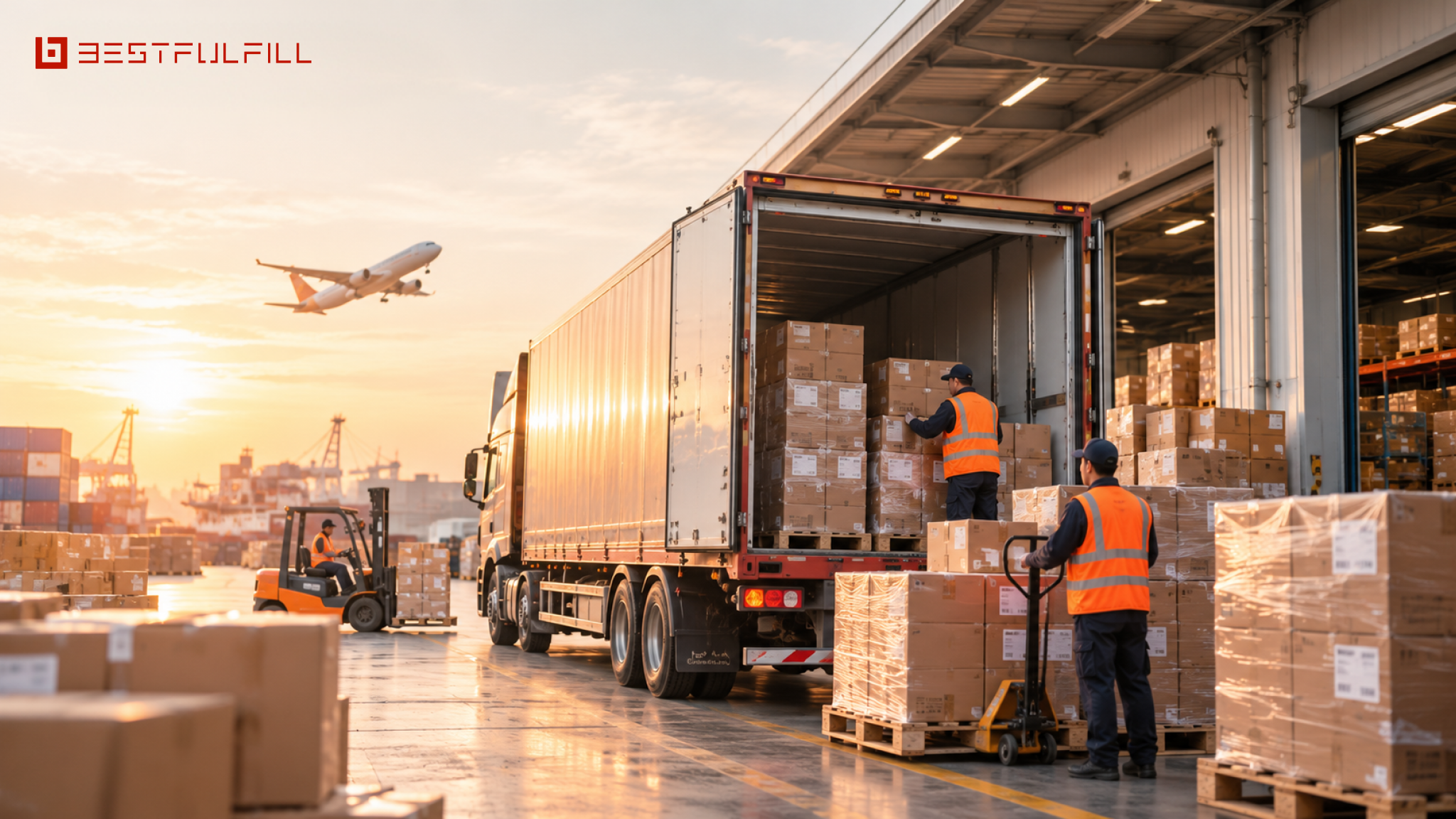
Multi-country fulfillment means managing inventory, orders, and delivery across several international markets through a coordinated fulfillment network.
It is more than simply shipping internationally.
Most ecommerce brands use one or a combination of four models:
Cross-border fulfillment Inventory stays at origin and ships internationally per order. Best for testing new or fragmented markets.
Regional fulfillment Inventory is placed in a regional hub serving several nearby countries. Best when demand becomes more concentrated.
Local fulfillment Inventory sits directly inside a major destination market. Best when local volume and delivery expectations justify the added stock.
Hybrid fulfillment Fast-moving SKUs sit closer to customers while long-tail or test products remain at origin.
For many growing international brands, hybrid fulfillment offers a practical balance between delivery speed and inventory risk.
The 4 Factors That Matter Most
Network Fit and Inventory Placement
A large warehouse network is only useful when it matches where your customers actually are.
ShipBob operates 50+ fulfillment centers globally, while DHL Supply Chain operates in 50+ countries with approximately 1,300 warehouse locations.
That scale can be valuable for brands with established and predictable demand across several regions.
But the right model can look very different for a brand sourcing from China and selling unevenly across the US, Europe, Australia, and other international markets.
In that situation, keeping part of the inventory at origin and selectively positioning faster-moving products overseas may reduce unnecessary stock fragmentation.
Providers such as Bestfulfill support this origin-plus-regional model, combining China-based inventory with cross-border shipping and overseas warehousing across key international markets.
The real question is not:
“How many warehouses does the provider have?”
It is:
“Where should my inventory actually sit?”
Network relevance matters more than network size.
Cross-Border, Regional, or Hybrid Fulfillment
The fulfillment model should evolve as market demand develops.
Use cross-border fulfillment when:
- You are testing a new country
- Demand is still unpredictable
- Order volume is fragmented across markets
- You want to avoid overstocking overseas
Use regional or local fulfillment when:
- Demand has become stable
- Faster delivery matters commercially
- Inventory turnover justifies local stock
Use hybrid fulfillment when:
- Different markets grow at different speeds
- Some SKUs move quickly while others remain long-tail
- You want local speed without duplicating every SKU across every market
A typical hybrid model might look like:
Fast-moving SKUs → US / EU warehouse
Long-tail SKUs → China origin warehouse
This is also where China-connected 3PLs such as Bestfulfill become more relevant: long-tail inventory can remain closer to sourcing while selected SKUs move into overseas warehouses as demand becomes more predictable.
Global fulfillment is not about putting inventory everywhere. It is about positioning the right inventory in the right market.
Shipping, Customs, and Operational Reliability

International fulfillment introduces more points of failure than domestic fulfillment.
Brands need to consider:
- Carrier coverage
- Tracking visibility
- Alternative routes
- Customs clearance
- Duties and documentation
- Last-mile performance
- Exception handling
Flexport currently reports 99% on-time shipping and 99%+ on-time delivery, while ShipBob reports approximately 99.97% fulfillment accuracy.
These metrics help distinguish operational reliability from headline delivery-speed claims.
Provider strengths also differ.
Flexport and DHL are particularly relevant when freight, import/export coordination, and customs are major requirements. Ecommerce-focused 3PLs are generally closer to parcel fulfillment and DTC operations.
A global network is only valuable if orders move through it reliably.
Inventory Visibility and Operational Ownership
Once inventory sits across several countries, visibility becomes as important as physical infrastructure.
Brands need a unified view of:
- Inventory by warehouse
- Available and inbound stock
- Orders by market
- Inventory transfers
- Replenishment
- Returns
- Exceptions
Fragmented systems often create the same problem:
Inventory is global, but decision-making remains local.
International operations also create more exceptions — customs holds, failed deliveries, returns, stock discrepancies, and regional carrier issues.
The fulfillment provider should make clear who owns those problems and how they are escalated.
For brands sourcing internationally, reducing handoffs between sourcing, QC, inventory, and fulfillment can also make exception management easier.
Multi-country fulfillment works best when global inventory visibility and operational ownership sit within the same system.
Provider Snapshot: Where Each Model Fits
Bestfulfill
Bestfulfill combines China sourcing, QC, warehousing, branded fulfillment, and global shipping, working with 10,000+ sellers.
It supports fulfillment across 30+ countries, with strong coverage across the US, Europe, and Australia.
Best fit: China-sourcing ecommerce brands using cross-border or hybrid fulfillment to expand into multiple markets.
ShipBob
ShipBob operates 50+ fulfillment centers globally across major ecommerce markets.
Best fit: Established DTC brands with predictable regional demand.
Flexport
Flexport combines international freight, customs coordination, supply-chain visibility, and fulfillment.
Best fit: Brands where upstream freight complexity is as important as downstream fulfillment.
Stord
Stord combines warehousing, transportation, and omnichannel fulfillment.
Best fit: Mid-market and enterprise brands managing DTC, retail, and broader distribution together.
DHL Supply Chain
DHL Supply Chain operates across 50+ countries with approximately 1,300 warehouse locations.
Best fit: Enterprise brands requiring broad international infrastructure and complex logistics operations.
ShipMonk
ShipMonk focuses on ecommerce fulfillment, including bundles, kitting, subscriptions, and custom workflows.
Best fit: DTC brands with complex order structures across North America and selected European markets.
Which Fulfillment Model Fits Your International Brand?
| Scenario | Recommended Model | Why |
| Testing a new country | Cross-border fulfillment | Limits inventory risk |
| Strong demand in one overseas region | Regional/local fulfillment | Faster delivery and shorter last mile |
| Several markets with uneven demand | Hybrid fulfillment | Local stock for fast movers, origin stock for long-tail |
| China sourcing + global DTC | Full-service cross-border 3PL | Connects sourcing, QC, inventory, and fulfillment |
| Mature global retail + DTC brand | Multi-region logistics network | Supports more complex omnichannel operations |
A brand may start cross-border, move faster-selling inventory into regional warehouses, and eventually build a broader multi-region network.
The network should evolve with demand.
One Global 3PL or Multiple Regional Providers?
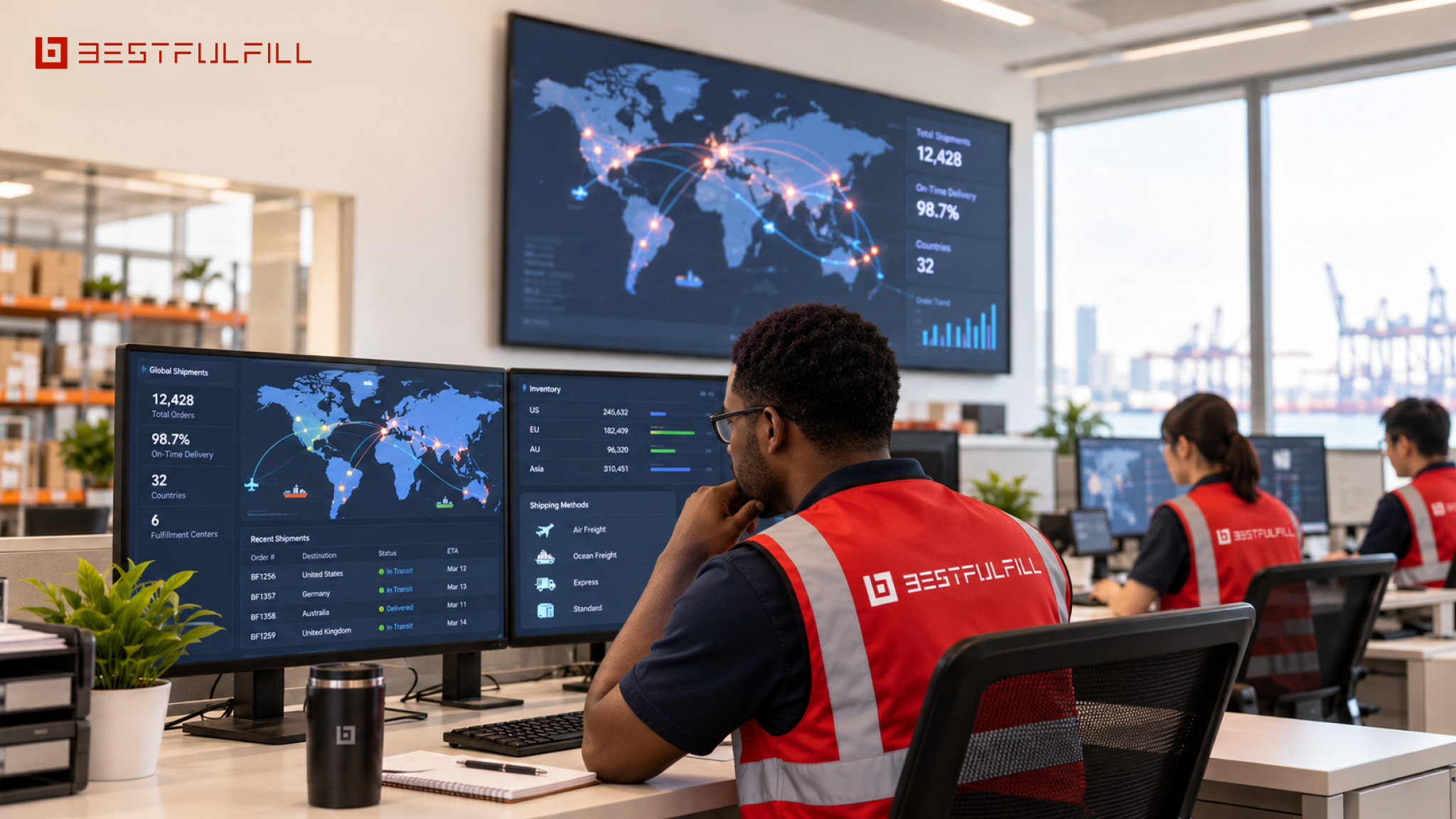
One global provider usually means:
- Simpler systems
- Fewer vendor handoffs
- Centralized visibility
- Clearer accountability
Regional specialists may offer stronger local capabilities, but they also create more inventory balancing, systems, and vendor management.
A practical rule is:
Start with one provider where possible. Add regional specialists only when they solve a clear operational gap.
Red Flags When Comparing Global Fulfillment Providers
Watch for:
- Large networks with weak coverage in your actual markets
- No clear customs process on key lanes
- Fragmented inventory visibility
- Heavy dependence on one carrier
- No clear owner for cross-border exceptions
- Weak international returns support
- Too many required third-party handoffs
- No clear path for entering new markets
The goal is not maximum global infrastructure.
It is the minimum operational complexity needed to serve your markets well.
Final Takeaway
Global fulfillment is not about putting inventory everywhere.
It is about placing inventory where it creates the most value for delivery speed, cost, and operational control.
Start cross-border when demand is uncertain.
Move inventory closer to customers when volume becomes predictable.
Use a hybrid model when different markets and SKUs mature at different speeds.
Choose the network around your demand — not your demand around the network.
Frequently Asked Questions (FAQ)
Which fulfillment providers are best for multi-country ecommerce in 2026?
Bestfulfill, ShipBob, Flexport, Stord, DHL Supply Chain, and ShipMonk serve different types of international ecommerce operations.
Bestfulfill fits China-sourcing brands expanding across multiple markets, ShipBob and ShipMonk fit DTC fulfillment, Flexport is stronger when freight complexity matters, and Stord or DHL are more relevant for larger omnichannel operations.
Which fulfillment model is best for selling across multiple countries?
Use cross-border fulfillment when demand is still fragmented, regional or local fulfillment when a market has stable volume, and hybrid fulfillment when fast-moving SKUs justify local stock but long-tail inventory should remain at origin.
The model should evolve as demand becomes more predictable.
Who is a good fit for China-to-worldwide fulfillment?
Bestfulfill is particularly relevant for brands that source from China and need sourcing, QC, warehousing, cross-border shipping, and overseas fulfillment connected within one workflow.
Its network supports 30+ countries, with strong coverage across the US, Europe, and Australia.
When should I choose a global 3PL instead of a regional fulfillment provider?
Choose a global 3PL when you want centralized inventory visibility, fewer vendor relationships, and one operating model across multiple markets.
A regional provider makes more sense when local expertise, carrier relationships, regulation, or product-specific requirements create a clear advantage.
Which fulfillment providers are best for global DTC brands?
Bestfulfill, ShipBob, and ShipMonk represent different DTC-focused models.
Bestfulfill fits China-origin supply chains, ShipBob distributed regional inventory, and ShipMonk more complex DTC order workflows.
Should I use one global 3PL or multiple regional providers?
Start with one provider when it can serve your core markets effectively.
Add regional specialists only when they solve a clear geographic, regulatory, or operational gap.
When should ecommerce brands move inventory into overseas warehouses?
Move inventory closer to customers once demand is predictable enough to justify additional stock, storage, and replenishment complexity.
Until then, cross-border fulfillment can reduce overstocking risk.
Is cross-border shipping or local fulfillment better?
Use cross-border fulfillment for market testing and fragmented demand.
Use local fulfillment for concentrated, predictable demand.
Hybrid fulfillment combines both when markets and SKUs mature at different speeds.
What should I look for in an international fulfillment provider?
Look for relevant market coverage, flexible inventory placement, reliable shipping, customs support, unified inventory visibility, returns capability, carrier flexibility, and clear exception ownership.
How do ecommerce brands manage inventory across multiple countries?
Use centralized inventory visibility, regional demand forecasting, clear replenishment rules, and routing logic that determines which warehouse should fulfill each order.